A Mountain
to Die On
800 feet from the greatest prize in mountaineering. Four men left on the mountain. Fifty years before the truth came down.
A Mountain
To Die On
800 feet from the greatest prize in mountaineering. Four men left on the mountain. Fifty years before the truth came down.
A Mountain
A Mountain to Die On
800 feet from the greatest prize in mountaineering. Four men left on the mountain. Fifty years before the truth came down.
The Socialite
Dudley Wolfe had crossed an ocean under sail and driven an ambulance through a world war. The one thing he never mastered was climbing.
Dudley Francis Cecil Wolfe was born on February 6, 1896, into a world of inherited wealth and invented pedigree. His father, an English immigrant coffee importer, mixed in New York society on entirely fictitious stories of an aristocratic past. His mother Mabel was the daughter of Benjamin Franklin Smith, whose Colorado mining fortune — worth $70 to $100 million by 1927 — made him reputedly the richest man in New England, roughly a billion dollars and more in today's money.
When the U.S. military rejected him in 1916 — poor eyesight, flat feet — Wolfe joined the Red Cross ambulance corps and drove a converted Model T through the killing fields of the Great War, later earning the Croce di Guerra with the Italian Ambulance Service. Called up at last by the French Foreign Legion in October 1918, he served one month before the Armistice. His old school, which had once expelled him for poor grades, now acclaimed him as its most decorated former student.
In 1929 he commissioned a sixty-foot schooner, Mohawk, and became the first person to race a sixty-foot yacht across the Atlantic — finishing second in the King and Queen's Cup against vessels of a hundred feet and more, captaining her himself.
He entered Harvard at 29 despite lacking the qualifications and graduated in 1930. He married skiing pioneer Alice Damrosch in 1934, asked for a divorce in 1938 — and they went on living together anyway. He skied across the Mont Blanc massif. Rock climbing, with all its technicalities, he tried and never mastered; in the spring of 1939 he failed to summit Mont Blanc and Piz Palü even with a guide.
In early 1938, in their Fifth Avenue apartment, Wolfe and Alice projected slides of their Alpine seasons for their friends. Among the guests was Fritz Wiessner — quietly scanning the room for wealthy mountaineers who might fund his obsession.
The second American expedition sets out
The expedition on film, 11:53–12:48 · Quest for K2: Savage Mountain (National Geographic, 2000) · footage © the filmmakers · local excerpt
Chosen for Wealth,
Not for Mountains
Every qualified climber Wiessner invited said no. What sailed from Genoa was a team selected by bank balance.
With the American economy in poor shape, there was no public or private funding to be had for 1939. Wiessner had to build a team from men who could pay their own way — $2,500 each, about $17,500 all told, six months from home. Every strong climber he invited turned him down: Bill House, Adams Carter, Sterling Hendricks, Roger Whitney, Alfred Lindley. House later admitted his refusal was down to personal differences with Wiessner.
What assembled instead was a team that Jack Durrance, in his private diary, judged under-qualified — every man of them, himself included, save Wiessner.
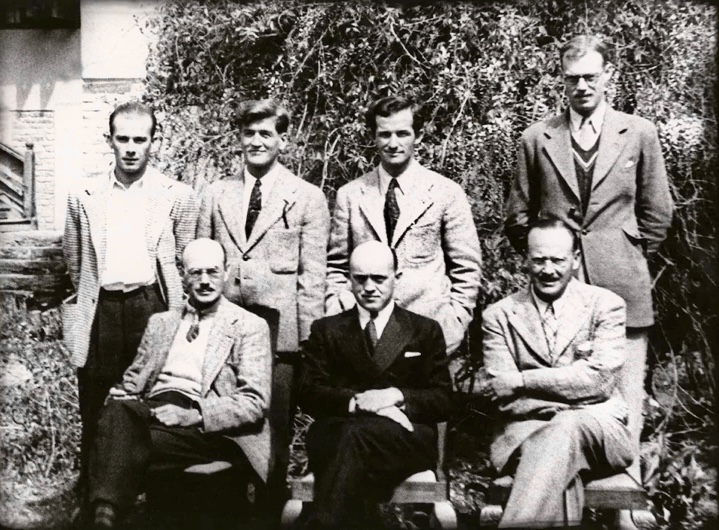
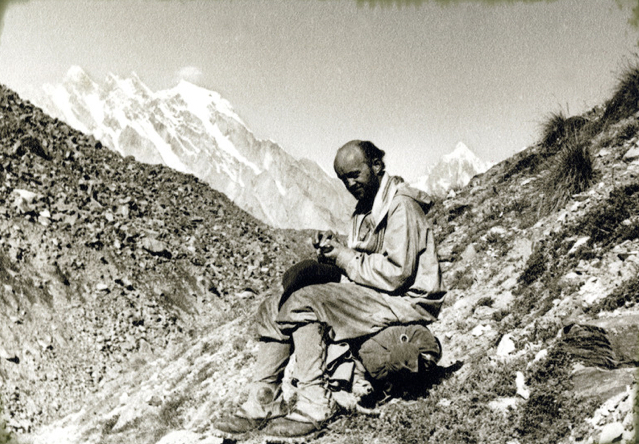 1939 · Durrance Coll. · AAC
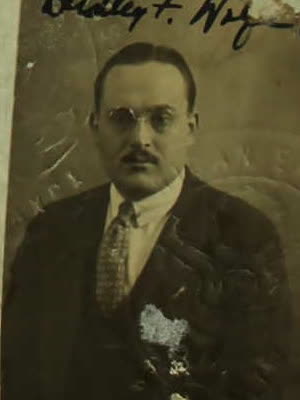 1919 · Passport photo
 1939 · Durrance Coll. · AAC
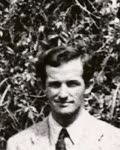 1939 · Durrance Coll. · AAC
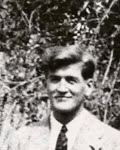 1939 · Durrance Coll. · AAC
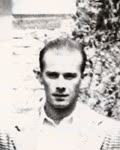 1939 · Durrance Coll. · AAC
And there were the nine Sherpas from Darjeeling, led by sirdar Pasang Kikuli — Nanda Devi 1936, K2 1938: the most experienced high-altitude climber in the world. His deputy was Pasang Dawa Lama. Four of the nine had been on K2 the year before. They would prove more capable than most of the men they served — and they shared no common language with them.
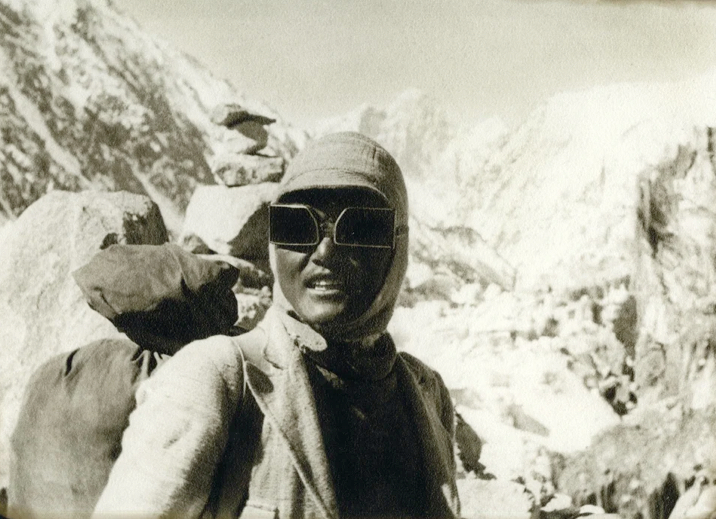 1939 · Durrance Coll. · AAC
On March 29, 1939, the team boarded the Italian liner Conte Biancamano at Genoa and sailed for Bombay, arriving April 10 — Europe sliding toward war behind them. At the pier came word that Vittorio Sella himself — the grand old man of mountain photography, veteran of the Duke of the Abruzzi's 1909 expedition, whose photographs appear throughout this page — wished to meet the men going back to his mountain. His advice traveled with them: it was Sella's recommendation to study the northeast ridge that sent Wiessner out on a reconnaissance on June 1, before he settled on the Abruzzi.
At Srinagar, Wolfe was dismayed to learn that his advice to bring two-way radios had not been taken. On the mountain, every message would move only as fast as a man could climb.
The approach had harder days. At Urdukas the porters, unwilling to go on in bad weather, struck for higher pay — then changed their minds, the rates unchanged, with only three spare days of tsampa in reserve. There were not enough snow goggles to go around: makeshift glasses were cut from cardboard with narrow slits, and three porters went snow-blind anyway and were sent back to Askole, their loads divided among Cranmer, Durrance, Sheldon and Trench.


The Savage Mountain
28,251 feet. Three expeditions had already failed on it. The 1938 party had left a route open like a door ajar.
K2 stands 28,251 feet above sea level on what was then the border of British India and China — the second-highest mountain on Earth, the highest point of the Karakoram, and the first great peak to catch every storm rolling in across Central Asia.
Just reaching it took a month: 330 miles from the roadhead at Wayil, by foot and pony, over the Zoji La and up the Baltoro Glacier. Cromwell called it a bleak and barren country. On May 31 the party turned into the Godwin-Austen Glacier and saw K2 at last.
In 1909 the Duke of the Abruzzi's expedition — with Vittorio Sella hauling 30×40 cm photographic plates across the glaciers — reached about 20,510 feet on the southeast ridge before declaring the mountain unclimbable. The ridge took the Duke's name anyway.
In 1938, Charlie Houston's American reconnaissance climbed that same ridge to about 26,000 feet, mapped the camps, solved the House Chimney, and came home with a clear route to the summit.
The way was open. Wiessner needed only to follow it.


The savage mountain from the air
Footage © the filmmaker · local clip · tap for sound
Watch the full documentary ↗Fifty-three days on the Abruzzi Spur
What follows is the expedition day by day, over the real terrain of K2 — every dated position drawn from the expedition record. Each dot is a person. Scroll, and watch the gap widen — fatally — between the summit party and the world below.
Camp locations are placed approximately along the Abruzzi route; altitudes are as documented in 1939.
Base Camp Established
After a month-long trek from Srinagar — 330 miles by foot and pony — the expedition establishes Base Camp at 16,500 feet on the Godwin-Austen Glacier.
The next day, Cranmer collapses with pulmonary edema. Durrance saves his life with two hours of artificial respiration. He will not go high again.
Porters are sent back to Askole with instructions to return on July 23. They have 53 days to climb the mountain.
Wiessner Takes the Lead
Camp II established as the main supply depot — 3,360 pounds of stores. Wiessner discovers Cromwell has barely advanced beyond the 1938 sites. He takes over all lead climbing.
Wolfe, slow but tireless, climbs with him. The rest of the team settles into the lower camps.
The Eight-Day Storm
A storm pins the expedition for eight days. At Camp IV the temperature drops to −2°F (−19°C). At Camp II, hurricane-force gusts reach 80 mph.
Wiessner, in the expedition report: the gusts struck the tents "sounding like veritable machine-guns… To describe these days and nights of storm and cold is not within my power. They were terror-inspiring."
Durrance's boots finally arrive on June 28. Sheldon has severe frostbite and is sent down permanently.
The House Chimney
Wiessner scales the House Chimney — the crux gully Bill House had led over four hours in 1938 — fixes ropes, and pulls Pasang Kikuli up after him. "I can only commend House for his ability in having originally led up this piece of difficult rock climbing," he would write in the expedition report.
The next day, on a very tight rope, he hauls Wolfe and another Sherpa up the cliffs. The four establish Camp V at 22,000 feet, right above the chimney, where the sharp part of the ridge begins.
Camp VII — Top of the Ridge
Above the chimney, Wiessner leads the party up the ice slopes and out through the rock towers of the Black Pyramid to establish Camp VII at 24,700 feet — the top of the Abruzzi Ridge.
No supplies have reached even Camp IV. Wiessner descends all the way to Camp II to find out why.
Durrance Collapses
Ascending to Camp VII, Durrance collapses with altitude sickness — likely cerebral or pulmonary edema. He barely manages to descend to Camp VI.
The supply chain is now broken. Above, three climbers and three Sherpas continue toward the summit. Below, no one is fit to climb.
Camp VIII — The Shoulder
Wiessner, Wolfe, and Pasang Dawa Lama reach Camp VIII at 25,300 feet on The Shoulder. Below them at Camp VII they leave a stocked depot — "two tents, two stoves, six quarts of fuel, three sleeping-bags, and twelve days' food."
Durrance has retreated all the way to Camp II.
Wolfe Turns Back at the Bergschrund
The summit assault begins. At the bergschrund above Camp VIII it becomes clear Wolfe can climb no higher. He returns to Camp VIII to wait.
Wiessner and Pasang Lama push on, establishing Camp IX at 26,050 feet on a rock pillar. Provisions for 6 days. Fuel for longer.
By this day Wiessner has spent 24 days above 22,000 feet, and Dudley Wolfe 26.
800 Feet from the Summit
9:00 AM, perfect weather: Wiessner and Pasang Dawa Lama leave Camp IX for the summit.
By nightfall they stand at ~27,450 feet — 800 feet below the top. In darkness they turn back, and reach camp at 2:30 in the morning.
The Camps Are Stripped
Sherpas descending from the middle camps strip Camps VI and VII — tents, mattresses, sleeping bags.
July 21: Wiessner and Pasang Lama make a second attempt and turn back low. They return to Camp IX.
Sheldon and Cranmer leave Base Camp for home — Dartmouth term begins soon.
Wolfe Found Alone
Wiessner and Pasang Lama descend to Camp VIII and find Wolfe alone — he has been there since July 17.
Roping down toward Camp VII, a fall nearly takes all three off the mountain. Wolfe's sleeping bag is lost.
At Camp VII, Wolfe stays. Wiessner and Pasang Lama continue down. Dudley Wolfe is now alone at 24,700 feet.
Back to Base Camp
Wiessner and Pasang Lama stagger into Base Camp, barely able to walk. Pasang Lama is in dire condition. Wolfe remains at Camp VII, alone.
July 25: Durrance starts back up with Dawa Thondup, Phinsoo, and Pasang Kitar. Exhausted, he and Dawa Thondup turn back from Camp IV; the two Sherpas continue to Camp VI.
Kikuli’s Impossible Climb
Pasang Kikuli and Tsering Norbu leave Base Camp at 6:00 AM. By noon they reach Camp IV. By evening — Camp VI.
They have climbed 7,000 vertical feet in a single day — almost 1,000 feet per hour. Western climbers would not match this alpine-style ascent for decades.
Cromwell and Trench have already left, leading the porters back to Askole.
The Sherpas Reach Wolfe
At noon, Pasang Kikuli, Pasang Kitar, and Phinsoo reach Wolfe at Camp VII. He has been alone there for a week.
He refuses to descend. He tells them to come back tomorrow — he will be ready then.
The three return to Camp VI for the night.
The Last Ascent
After being stormbound on July 30, Pasang Kikuli, Pasang Kitar, and Phinsoo climb toward Camp VII once more.
Pasang Kikuli, Pasang Kitar, Phinsoo,
and Dudley Wolfe were never seen alive again.
Something Awful
Tsering Norbu waits two days at Camp VI, then runs down the mountain in a single morning.
Durrance writes in his diary: "The Sherpas are certain something awful has happened."
Wiessner refuses to believe it — it seems impossible to him that anything could have happened to so able a group.
The Last Search
With no one left fit to climb, Wiessner sets out anyway with Tsering Norbu and Dawa Thondup. It takes them all day to reach Camp I.
A storm pins them there until August 7. Then Tsering Norbu corrects his earlier account: they had found Wolfe at Camp VII with no food at all.
Even Wiessner loses hope. Wolfe and the three Sherpas are gone.
Where the air runs out
Footage © the filmmaker · local clip
Watch the full documentary ↗
800 Feet from Glory
No one had ever stood on an 8,000-meter summit. By nightfall, two men were an easy snow plateau away from being first.
Wiessner and Pasang Dawa Lama left camp with the summit 2,200 feet above them — a late start.
At a point of decision, Wiessner faced two ways up: a traverse right into the couloir later named the Bottleneck, beneath unstable ice from the summit cornice — or a direct rock climb to the left, free of falling ice but brutally difficult. He chose the rock.
Nine hours of climbing followed, at a technical standard unprecedented at that altitude — a line that, as of Viesturs and Roberts' 2009 account, has never been repeated.
By dark they stood at roughly 27,450 feet — "about 27,500," by Wiessner's own report. Above them lay 800 feet of easy snow. Wiessner wanted to push on through the night and finish it.
Pasang Lama refused, and would not pay out the rope. Wiessner agreed to turn back — he did not go on alone, and through all the bitterness to come, he never once criticized his partner.
Going back down the cliffs in darkness, Pasang Lama lost both pairs of crampons he was carrying.
They tried again by the Bottleneck. Without crampons, in bad snow, it was hopeless. They returned to Camp IX. The summit was finished.
Jim Curran's later verdict: had Wiessner taken the couloir on the 19th, the pair might have summited and returned to camp the same day — the first humans atop an eight-thousander, without oxygen, fifteen years before Annapurna — and, with the high camps still stocked and manned as Wiessner believed they were, everyone might have come home.
The Long Wait
While two men fought for the summit, the mountain beneath them was quietly emptying out. His dot still marks Camp VII.
While Wiessner and Pasang Lama fought for the summit, Dudley Wolfe waited at Camp VIII, where his body had given out at the bergschrund on July 17. He would come down only as far as Camp VII — and never a foot below it under his own power. And beneath them both, the expedition had been quietly coming apart for weeks. The team was splitting along class lines — Wolfe drawn closer to Wiessner, possibly because he was paying most of the bills. After the eight-day storm, only Wiessner and Wolfe still wanted the summit; everyone else below had lost the will. The support parties were astonished by Wiessner's progress but had barely been functioning, and at Camp II, Durrance found Cromwell and Trench in complete apathy.
What happened next was a cascade of misread signals — hurried instructions in a borrowed language, an order meant for the valley, three shouts into silence. Each step of it was reasonable. Each step of it was wrong.
July 13 — Durrance, collapsing, leaves rushed instructions for the Sherpas to ferry supplies upward. The Sherpas and the Americans share no common language; the instructions may never have been understood.
July 18 — Cromwell orders the lower camps cleared. As far as the world below the Shoulder is concerned, the expedition is going home.
July 20 — Tse Tendrup climbs to within 500 feet of Camp VIII and shouts, three times, into the silence. No answer comes. There is fresh avalanche debris. He concludes the summit party is dead.
July 20–21 — Believing the men above are gone, and seeing the lower camps already coming down, the Sherpas strike Camps VI and VII — tents, mattresses, sleeping bags. By July 23 they are at Base Camp.
In Wiessner's account, Tendrup, "calling up to Camp VIII but receiving no answer, convinced the others that we three — the summit party — had been killed high up on the mountain and that they… should salvage what they could — i.e., the sleeping-bags and mattresses."
By the time Wiessner and Pasang Lama came back down to him on July 22, Wolfe had been alone for days — out of matches, unable to cook or even melt ice for water. And at Camp VII that evening, a second shock: the tents collapsed under snow, no mattresses, one sleeping bag among three men, food scattered. The camp had been stripped.
Wiessner left Wolfe at Camp VII — at Wolfe's own request, he later said — and descended with Pasang Lama, expecting to find supplies one camp down, still intending another summit attempt. Camp by camp they found nothing: little food, no sleeping bags, no people.
Wolfe was now the highest human being on Earth — and entirely alone.
No one below could picture what the wait was doing to him — the effects of living for weeks above 22,000 feet were simply not yet understood. When the rescuers finally reached him on July 29, they found what the mountain had done: Wolfe apathetic, trapped in a tent fouled with his own waste, uninterested in the letters they had carried up to him, unwilling to come down.
Fifty Years of Silence
The blame shifted like snow — from Wiessner, to Durrance. For fifty years, one man said nothing.
The fight over blame began before the mourning did. At Base Camp on July 24, Wiessner — enraged at what he had found on the way down — accused first Cromwell and then Tendrup of trying to murder him; Cromwell, in turn, accused Wiessner of abandoning Wolfe. They were enemies for life within the hour.
The recriminations began at Bandipora on August 27, when Cromwell saw Wiessner's draft report and — by Durrance's diary, the only record of the scene — shouted that Wiessner had murdered Wolfe and the Sherpas. Cromwell and Trench had already cabled the AAC and spread their account through the British community at Srinagar. Back in America, Wiessner gave a disastrous interview to the New York Times — reported ever afterward, though the exact words were never verified, as saying that in the high mountains, as in war, one had to expect casualties. The climbing world took sides. An AAC inquiry produced a report so bland it settled nothing; the American consul's official report, too, was built on partial evidence — its author had seen Wiessner's account but never the letters of Cromwell or Trench. Both Wiessner and Cromwell resigned from the club. In Maine, Wolfe's brother Clifford considered a lawsuit, then let it drop.
Dudley Wolfe Is Killed Trying to Climb 'K2'
Boston Sportsman Died July 30 on Mt. Godwin Austen, India, With Guide
ROCKLAND, Me., Aug. 23 — Clifford Smith of Boston and Warrenton Park, Rockport, today received a cablegram announcing the death of his brother, Dudley Wolfe… Owing to the severity of the weather it was impossible to recover the bodies, and the expedition has just made its way back to civilization.
The family learned by private cable days before the wider press took up the story — and the dispatch, like many first reports, got details wrong: it gave Wolfe's age as 44. He was 43.
For seventeen years, Wiessner bore the public blame. Then in 1956 he published his account — and with it a single piece of evidence: the story of something he said he had found, years before, on the floor of a tent at Camp II. The blame swung to Durrance, and stayed there. Wiessner was rehabilitated, made an honorary member of the AAC in 1966, and by the 1980s was revered.
Durrance said nothing. For thirty-three more years.
Wiessner died in 1988. Only then, in 1989, did Durrance open his handwritten expedition diary — sealed for fifty years — to the researchers Kauffman and Putnam. What Wiessner said he had found, what the diary recorded, and what was never found at all: the two accounts are below. Weigh them yourself.
The Note That Was Never Found
Two accounts, published thirty-three years apart. Tap each document to weigh it.
Wiessner’s account
Wiessner produced the story of a crumpled note, found on the floor of the tent at Camp II during his descent. It was, he said, in Durrance’s handwriting, and it announced the order to bring the sleeping bags down the mountain.
He said he had handed the note to the American Alpine Club’s committee of inquiry in 1939. Durrance never publicly refuted the story.
Durrance’s diary
For fifty years Durrance said nothing. Only after Wiessner died in 1988 did he open his handwritten expedition diary to the researchers Kauffman and Putnam.
It records that the order to clear the lower camps came from Cromwell, on July 18 — and that a note carried up to the Sherpas at Camp VII was most likely Cromwell’s, not his.
The mountain keeps its silence
Footage © the filmmaker · local clip
Watch the full documentary ↗The expedition ended in August 1939. Its story did not. The survivors carried it — some in silence, some in exile — through the rest of long lives, and the mountain went on writing epilogues of its own.

Sources & Further Reading
Everything on this page is drawn from the documented record.
In Memoriam
Those who did not return
 1919 · Passport photo1939 · Durrance Coll. · AAC
The mountain kept them for half a century, and then began to give them back. In 1993 the glacier returned Pasang Kikuli; in 1995, remains believed to be his companions'. And on July 12, 2002, the writer Jennifer Jordan and the filmmaker Jeff Rhoads, walking the Godwin-Austen below the south face, came upon a debris field "full of leather and hemp rope and bits of canvas… stuff that hadn't been used in decades" — and then the glacier gave up Dudley Wolfe himself: skeletal remains, vintage gear, and a leather mitten marked "Wolfe." In sixty-three years his bones and gear had traveled a mile and a half down the glacier — about four inches a day. What could be gathered was laid to rest at the Gilkey Memorial, his name inscribed on a dinner plate found among the debris.
Four Storms, One Mountain
1939 was only the first. Each disaster is told in the voice of its own era.